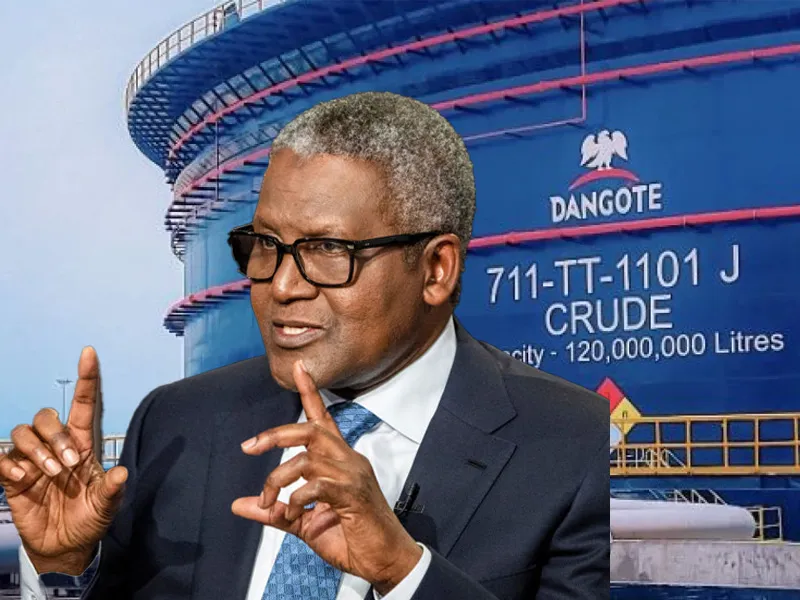
Nigerian billionaire Aliko Dangote has announced plans to build a $16 billion oil refinery in Lamu, Kenya, in what is expected to become the largest refinery in East Africa.
The proposed facility will have a processing capacity of about 700,000 barrels of crude oil per day, surpassing the 650,000-barrel-per-day capacity of Dangote’s refinery in Lagos.
Dangote disclosed the plan while speaking to reporters, explaining that the estimated cost had been reduced from an earlier projection of $17 billion.
He attributed the lower cost partly to the shorter construction period and lessons learned during the development of his Nigerian refinery.
The project is expected to be financed through a combination of debt and equity, with about 70% of the funding coming from debt and 30% from shareholders. This translates to approximately $11.2 billion in debt financing and $4.8 billion in equity.
Dangote expressed confidence in securing the required funding, saying:
“We don’t have a problem getting the money.”
Construction and Government Support
A groundbreaking ceremony for the refinery is expected to take place in October, with construction projected to be completed within four years if an agreement is reached with the Kenyan government.
One of Dangote’s major conditions is protection from cheaper imported petroleum products, particularly those coming from Russia and India.
He said:
“There is no refinery in the world that can survive without that protection.“
Kenyan President William Ruto has expressed support for the project and indicated that his government intends to acquire a stake through the National Infrastructure Fund, although the size of the proposed investment has not been disclosed.
Ruto said the refinery could help Kenya and other countries in the region reduce their dependence on imported fuel while limiting their exposure to disruptions along major global shipping routes.
Refinery to Serve East African Markets
The proposed Lamu refinery is expected to operate as a regional supply and export hub rather than focusing solely on Kenya’s domestic market.
The facility could source crude oil from Uganda through the East African Crude Oil Pipeline, while additional crude could come from Kenya’s Turkana oil fields as production increases.
Crude supplies could also be delivered by sea through the Port of Lamu.
Dangote’s planned investment comes as East African countries continue to rely heavily on imported refined petroleum products, leaving the region exposed to international oil prices, shipping disruptions and supply shocks.
The Lamu project would mark another major investment by Dangote’s business interests in Kenya, where his firm, Alterra Capital, has invested in tourism and hospitality businesses.
He had also previously obtained limestone prospecting rights in Kitui County before plans for a cement plant there were eventually abandoned.
Dangote, whose business interests span cement, sugar, fertiliser and oil refining, is estimated by Forbes to have a net worth of $28.5 billion.
The Kenya refinery announcement also comes as Dangote prepares for an initial public offering of his Nigerian refinery, a move expected to broaden its investor base and provide additional financial flexibility for expansion across Africa.