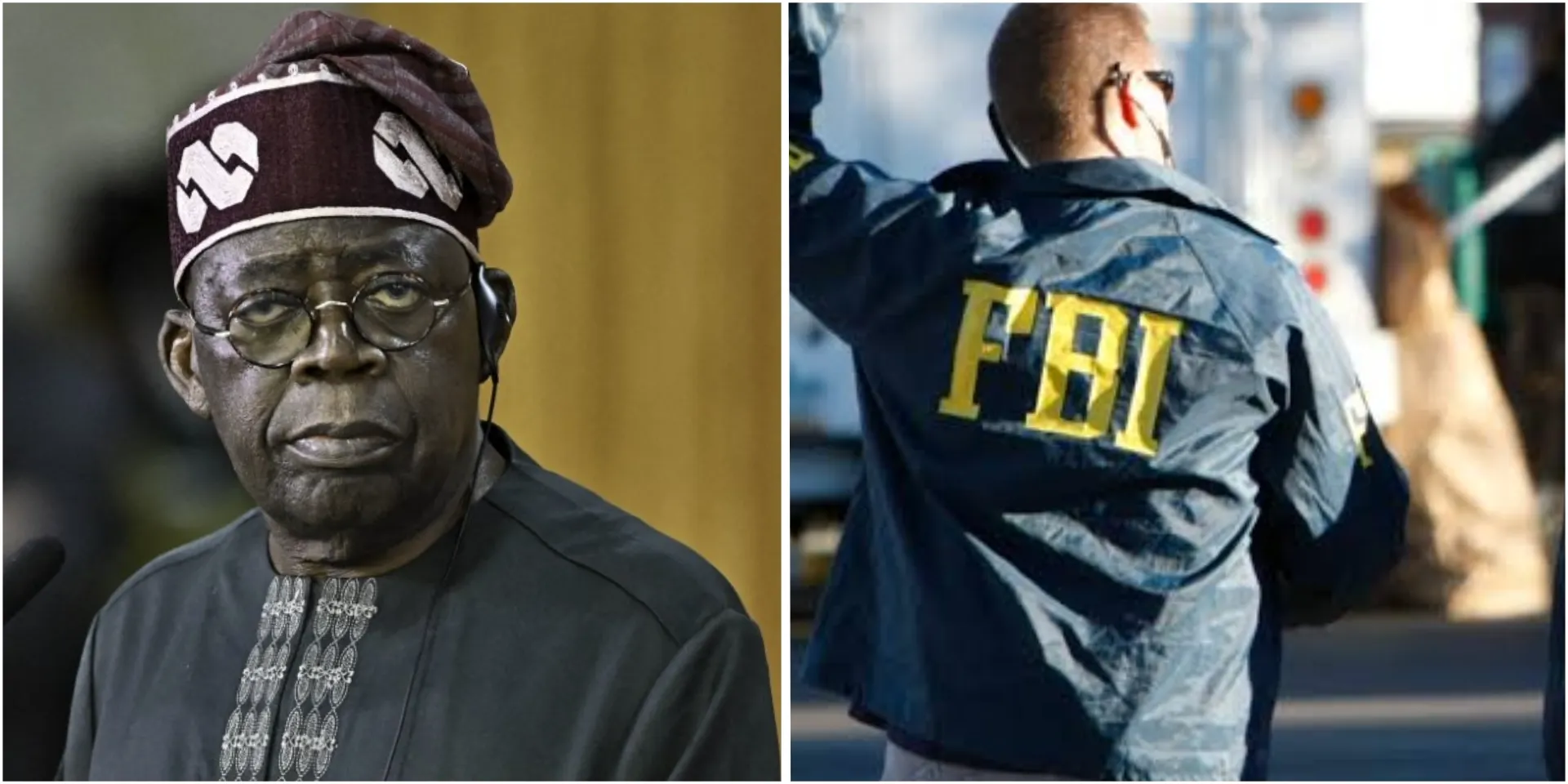
Ahead of Nigeria’s 2027 general elections, a fresh development has emerged in the ongoing US court battle over records relating to President Bola Ahmed Tinubu.
Lawyers representing Tinubu and the United States government have separately urged a federal court in Washington, D.C., to reject transparency activist Aaron Greenspan’s attempt to expand discovery in his Freedom of Information Act (FOIA) lawsuit.
The development was reported by The Nation on Sunday, September 27, 2026.
Greenspan seeks records linked to Tinubu
Greenspan, founder of the legal transparency website PlainSite, brought the FOIA case against several US federal agencies over records he requested concerning historical investigations involving Tinubu.
Among the materials sought are what Greenspan describes as the FBI’s entire file on Tinubu, FBI Form 302 interview records from 1992 to 1993, and documents connected to a 1993 US civil forfeiture proceeding involving about $460,000 linked to Tinubu.
The case is a civil FOIA dispute over access to government records, rather than a criminal prosecution of the Nigerian president. The Nigerian Presidency previously made the same distinction when discussing the proceedings.
Tinubu’s lawyers oppose expanded discovery
Tinubu’s legal team, participating in the case as an intervenor, argued that Greenspan was attempting to use the FOIA proceedings to conduct a broader investigation involving private individuals and organisations.
Greenspan had sought interrogatories, requests for admission and requests for production from Tinubu. He also sought to issue a third-party subpoena to DCI Group AZ, LLC, a public relations and lobbying company, as well as its unidentified parent company.
According to Tinubu’s lawyers, FOIA litigation is primarily designed to determine whether government agencies properly handled records requests, rather than to investigate the activities of private parties.
“Discovery is generally unavailable in FOIA actions,” the lawyers said in their filing, adding that courts only permit such discovery in limited circumstances, particularly where there are legitimate questions about an agency’s search for records.
Lawyers dispute Greenspan’s cyberattack claims
Greenspan had also alleged that PlainSite experienced denial-of-service attacks and suggested that the incidents could be connected to activity surrounding the lawsuit.
Tinubu’s lawyers rejected the suggested connection, noting that Greenspan had acknowledged that he did not know who was responsible for the attacks.
They further argued that the use of botnets could make it difficult to identify the source of such attacks and pointed out that PlainSite had experienced similar incidents at other times that were unrelated to the litigation.
“The relationship that Plaintiff draws between the website issues and this case remains wholly speculative,” the filing said.
The lawyers also opposed Greenspan’s request for expedited discovery, arguing that there was no sufficient urgency because, according to Greenspan’s own account, the attacks had stopped by the end of August 2026.
FBI and DEA defend their searches
In a separate filing dated September 23, the FBI and Drug Enforcement Administration (DEA) asked the court to rule in their favour through summary judgment.
The agencies maintained that they had conducted adequate searches for records covered by Greenspan’s FOIA requests and had acted in good faith.
The FBI said its search involved the terms “Bola” and “Tinubu” separately, followed by a manual page-by-page examination of a file containing information on multiple subjects.
The DEA, meanwhile, noted that Greenspan had not challenged the adequacy of its search.
Agencies cite FOIA exemptions
The FBI and DEA also defended their decisions to withhold or redact portions of the records.
The agencies cited several exemptions under US FOIA law, including protections covering grand-jury material, prosecutorial strategy, confidential sources and information that could potentially expose individuals to risks to their physical safety.
The dispute therefore remains focused on what records the agencies must disclose, what information can legally be withheld and whether Greenspan should be permitted to broaden the discovery process.
The case remains before the US District Court for the District of Columbia.