The United States Federal Bureau of Investigation (FBI) has acknowledged in a sworn court declaration that President Bola Ahmed Tinubu was investigated over drug-related crimes in the early 1990s.
However, the agency clarified that the existence of an investigation does not mean Tinubu was found guilty of any offence.
The declaration, dated August 28, 2026, and filed at the US District Court for the District of Columbia, said the records being requested were “compiled in furtherance of the FBI’s investigation of multiple individuals for drug-related crimes.”
The FBI also recognised that a previous court ruling had formally established the existence of an investigation involving Tinubu.
Background: How the FOIA Case Started
The case originated from Freedom of Information Act (FOIA) requests submitted by Aaron Greenspan, an American transparency activist.
Greenspan sought several records, including the “entire FBI file for Bola Ahmed Tinubu” as well as FBI Form 302 interview records linked to Case No. 245-IP-71386-UUUUUU, covering 1992 and 1993.
The requests formed part of a wider attempt to obtain records relating to a Chicago-based gang operation that was under investigation by US authorities at the time.
The case took a new turn following an April 2025 ruling by US District Judge Beryl Howell.
Judge Howell ruled that the FBI and the Drug Enforcement Administration (DEA) could no longer rely on “Glomar” responses to refuse to confirm or deny whether relevant records existed.
She subsequently ordered the agencies to process documents that were not protected from disclosure under FOIA exemptions.
According to The Tribune, the FBI has nevertheless continued to keep some portions of the records confidential, citing reasons including personal privacy, protection of confidential sources, law-enforcement methods and the safety of people mentioned in the documents.
Presidency Accuses Atiku of Political Manipulation
The latest disclosure was brought into wider public attention by Von Batten-Montague-York, a Washington-based lobbying firm that said it was examining records obtained from the FBI.
In a post on X, the firm claimed that the FBI’s declaration contradicted previous statements suggesting that Tinubu had never been investigated.
The Presidency strongly rejected the development.
Special Adviser to the President, Sunday Dare, accused former Vice-President Atiku Abubakar of engaging the lobbying firm as part of an attempt to create controversy ahead of the 2027 presidential election.
Dare alleged that filings under the US Department of Justice’s Foreign Agents Registration Act showed Atiku had retained the firm for $1.2 million over 12 months, with the objective of using historical US court documents as political leverage.
He described the development as “a clinical demonstration of desperation” and warned that comments from a lobbying firm should not be interpreted as the official position of the US government.
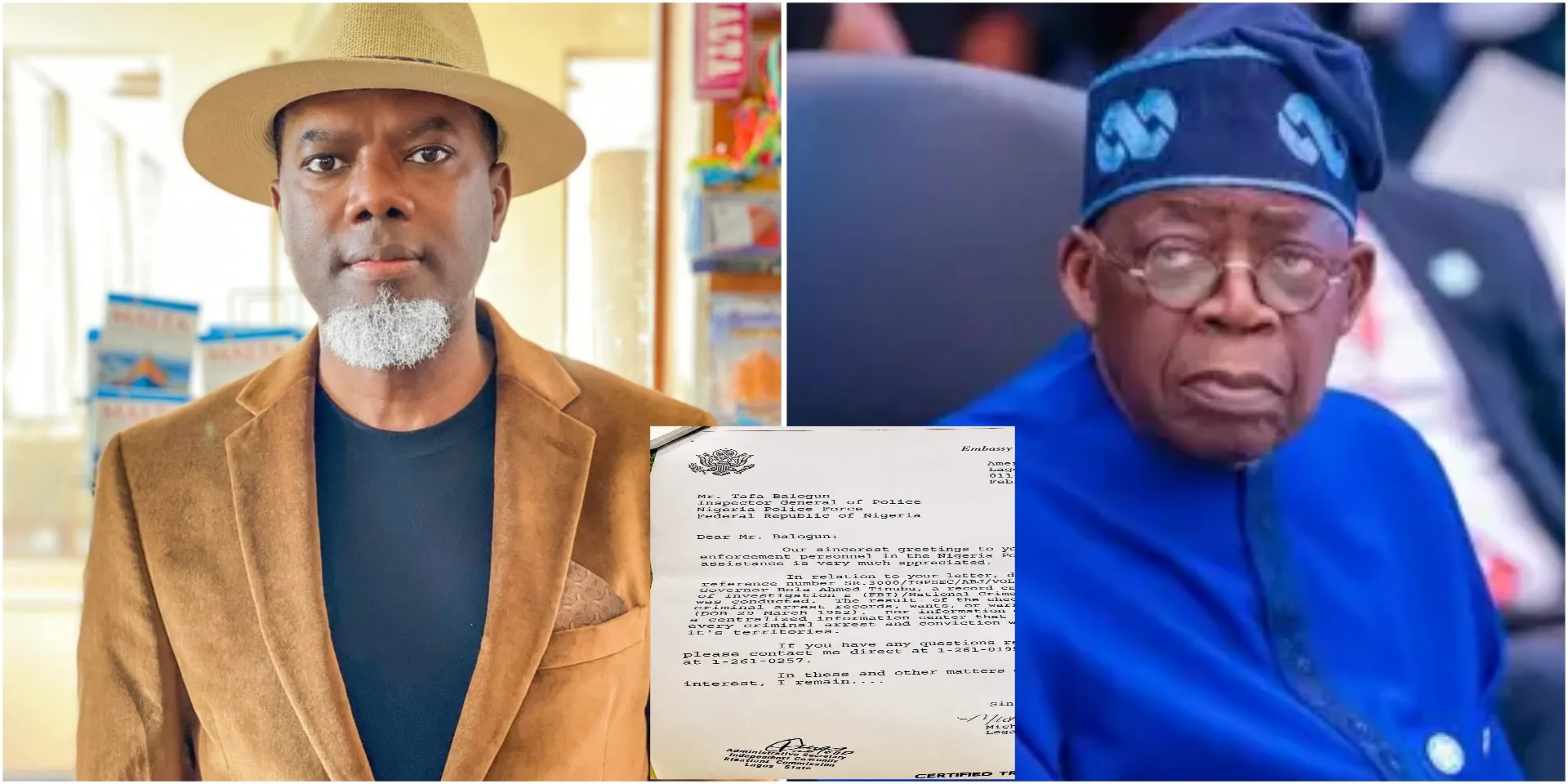
Dare also referred to Tinubu’s lawyer, Wole Afolabi, SAN, who said during an appearance on Channels Television that if the President had been criminally liable under US law, American authorities would have charged and prosecuted him at the time.
The FBI’s declaration confirms that Tinubu was mentioned in connection with a drug-related investigation in the early 1990s.
However, the publicly available court documents do not by themselves establish that Tinubu committed a crime or was convicted of any offence.