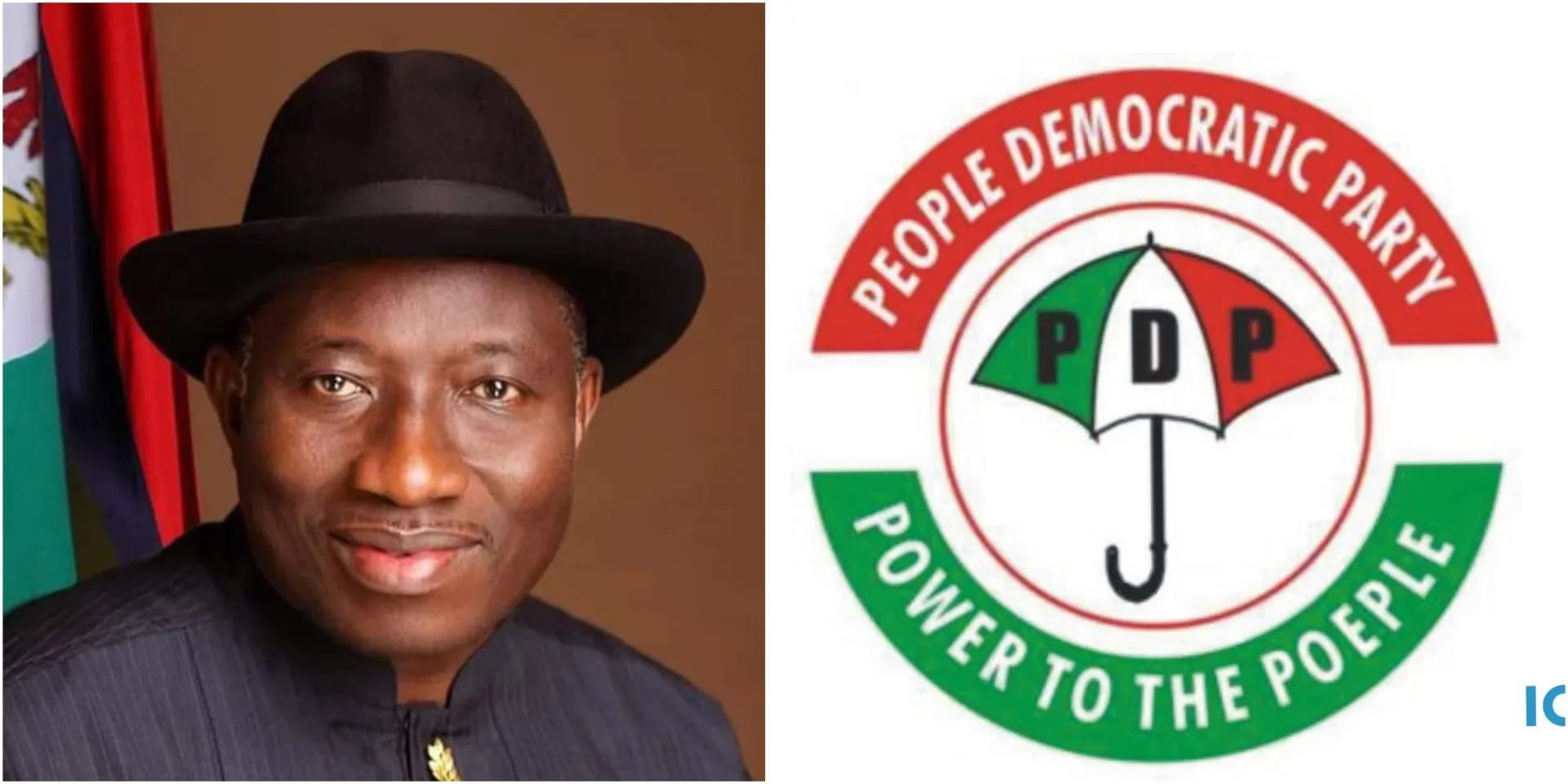
The Peoples Democratic Party (PDP), led by Tanimu Turaki, has scheduled the screening of former President Goodluck Jonathan for May 19, 2026, as part of preparations for the 2027 presidential election.
On May 18, former Vice President Namadi Sambo, former Plateau State Governor Jonah Jang, and former Minister of Foreign Affairs Tom Ikimi were listed among a 14-member committee constituted to conduct the screening of Jonathan.
The committee also included Olabode George, Babangida Aliyu, Maryam Ciroma, Zainab Maina, Josephine Anenin, Abdul Bulama, Esther Uduehi, the Edo State PDP chairman Tony Aziegbemi, Sunday Solarium, and Chief Anicho Okoro, who will act as the committee’s administrative secretary.
Although the party’s official statement only mentioned a “sole presidential aspirant,” findings from subsequent inquiries suggest that the individual being referred to is Jonathan.
Recently, Ini Ememobong, the faction’s national spokesperson, revealed that Jonathan had successfully completed his registration as a member of the PDP during a fresh digital registration exercise conducted in line with directives from the Independent National Electoral Commission of Nigeria (INEC).
Turaki-led PDP set to screen Goodluck Jonathan on Tuesday as sole presidential aspirant ahead of 2027 general elections pic.twitter.com/3wVI1AlCQy
— Instablog9ja (@instablog9ja) May 18, 2026
Goodluck Jonathan was elected President of Nigeria in April 2011 and was often referred to as “Nigeria’s Barack Obama,” as many viewed him as a symbol of change for the oil-rich but economically challenged country.
Jonathan, a Christian from southern Nigeria, popularly known as GEJ, used his modest background as a key part of his political appeal during the 2011 presidential campaign. At the time, the 68-year-old positioned himself as a relatable figure shaped by humble beginnings.
His rapid political ascent was remarkable, moving from a relatively low-level civil servant to becoming President of Africa’s most populous nation.
His entry into politics began when he was elected deputy governor of Bayelsa State in the Niger Delta region. He later became governor after his predecessor was removed from office over corruption allegations.
From that point, he advanced into national politics, being selected by PDP leaders as vice president. He later became president after the death of President Umaru Yar’Adua while in office. About a year afterward, he secured a presidential mandate of his own through election.