The Kano State Government has criticised the actions of some youths during the visit of Nigeria’s First Lady, Oluremi Tinubu, following an incident that sparked widespread backlash across the state.
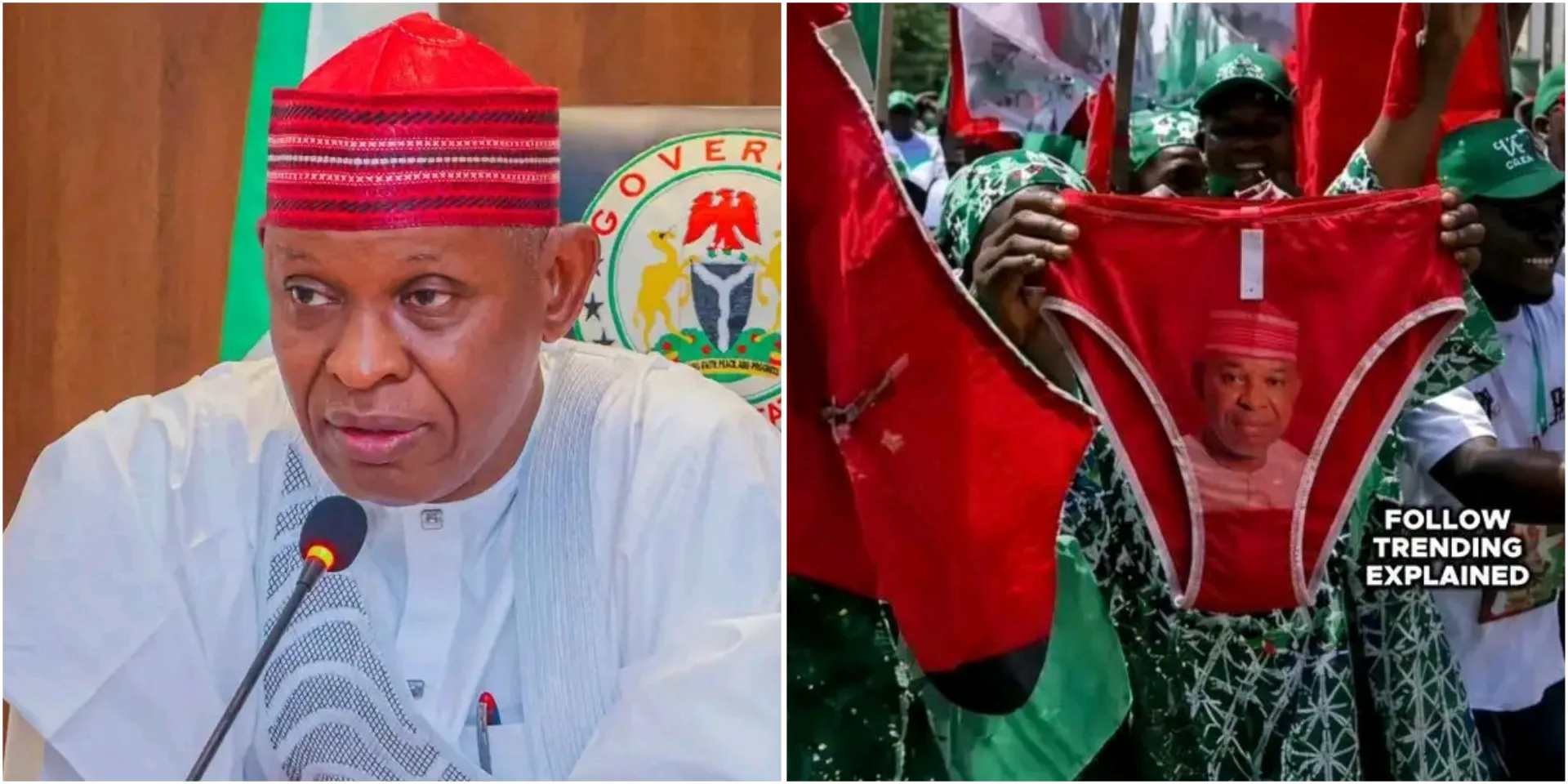
Authorities described the behaviour as inappropriate after a group of youths allegedly displayed undergarments in public during the official event.
Governor Abba Yusuf condemned the act and distanced his administration from those involved, stating that such conduct does not reflect the culture, values, or identity of the Kano people.
Government Condemns Public Display
The governor made the remarks during a special prayer session at the Government House, where thousands of Qur’anic reciters gathered to pray for peace and stability. His comments were conveyed in a statement released by his chief press secretary.
Describing the incident as unacceptable, Yusuf said it contradicted the moral and religious principles upheld in the state.
“Our youths should be symbols of hope and development, not tools for mockery or moral decadence,” he said.
Call for Discipline and Responsibility
The governor also urged political leaders to demonstrate better conduct and avoid actions that could negatively influence young people.
“I urge my fellow politicians to lead by example, cease the culture of insults, and focus on the Kano First Agenda rather than inciting our children toward indecency,” he added.
He called on those involved to apologise to residents and seek forgiveness for the embarrassment caused, warning against the use of youths for political agendas that could harm their future.
Yusuf reaffirmed his administration’s commitment to youth empowerment and the preservation of Kano’s cultural and religious values.
At the event, the Muhammadu Sanusi II, represented by Alhaji Aliyu Harazumi, noted that similar prayer gatherings would continue to promote peace and stability in the state.
Clarification on Viral Claim
Meanwhile, a separate viral claim suggesting that the Kano State Government distributed underwear to women as part of an empowerment programme was debunked.
The allegation, which circulated widely on social media alongside images, was found to be misleading and not an official government initiative.