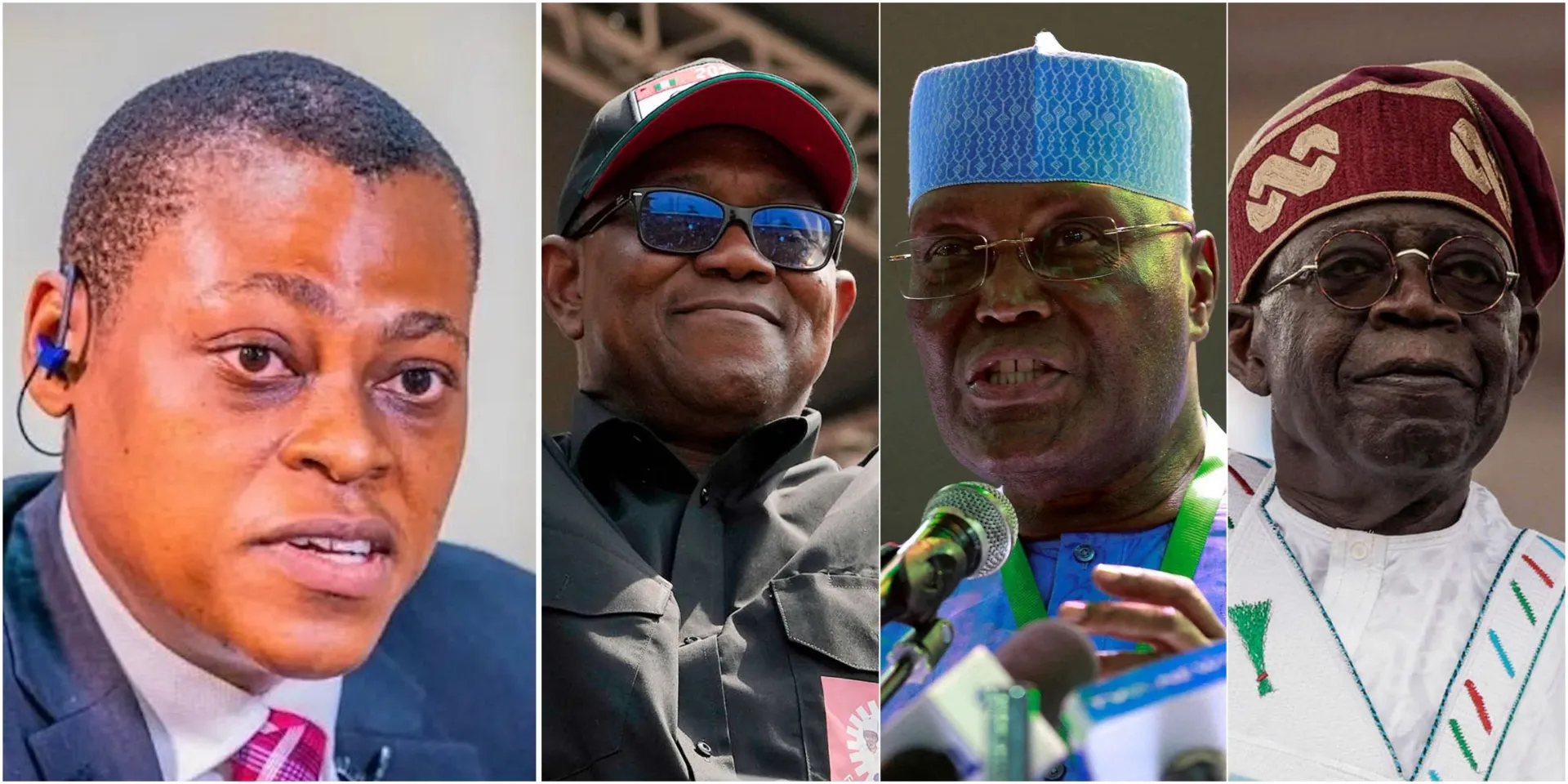
Arise Television co-host Rufai Oseni has come under criticism on social media after posting the results of an online civic opinion poll ahead of Nigeria’s 2027 presidential election.
On Tuesday, September 15, 2026, Oseni shared a screenshot from the Nigeria Elections Intelligence System (NEIS) platform on X with the caption, “Polling.”
The poll showed Peter Obi of the Nigeria Democratic Congress (NDC) with a commanding lead among the responses recorded.
According to the screenshot shared by the broadcaster, Obi accounted for 87.4 per cent of more than 2,500 counted responses.
Former Vice President Atiku Abubakar of the African Democratic Congress (ADC) came next with 5.1 per cent, while President Bola Ahmed Tinubu of the All Progressives Congress (APC) recorded 4.6 per cent.
Oluseyi Abiodun Makinde of the Allied Peoples Movement (APM) was listed with 1.9 per cent of the responses.
NEIS describes itself as an independent and non-partisan election intelligence platform involved in pre-election civic opinion polling and the mapping of polling units across Nigeria.
However, the figures shared by Oseni represent an online opinion exercise and do not constitute an official election result or carry electoral authority.
See the post below:
Polling pic.twitter.com/beb8FXPy3J
— oseni rufai (@ruffydfire) September 15, 2026
Social media users criticise Rufai Oseni
Oseni’s post generated a wave of reactions, with some users questioning what they described as the reliability and wider relevance of the poll.
Some critics argued that the broadcaster’s online audience contains a significant number of Peter Obi supporters, popularly referred to as Obidients.
According to those users, such an audience composition could influence the outcome of an online poll and make it difficult to treat the figures as representative of Nigeria’s wider electorate.
Others stressed that presidential elections are ultimately determined through votes cast at polling units rather than participation in social media or online polls.
The reactions therefore centred on whether the poll should be viewed simply as an indication of the opinions of its participants or as a reflection of broader public sentiment ahead of 2027.
See comments below: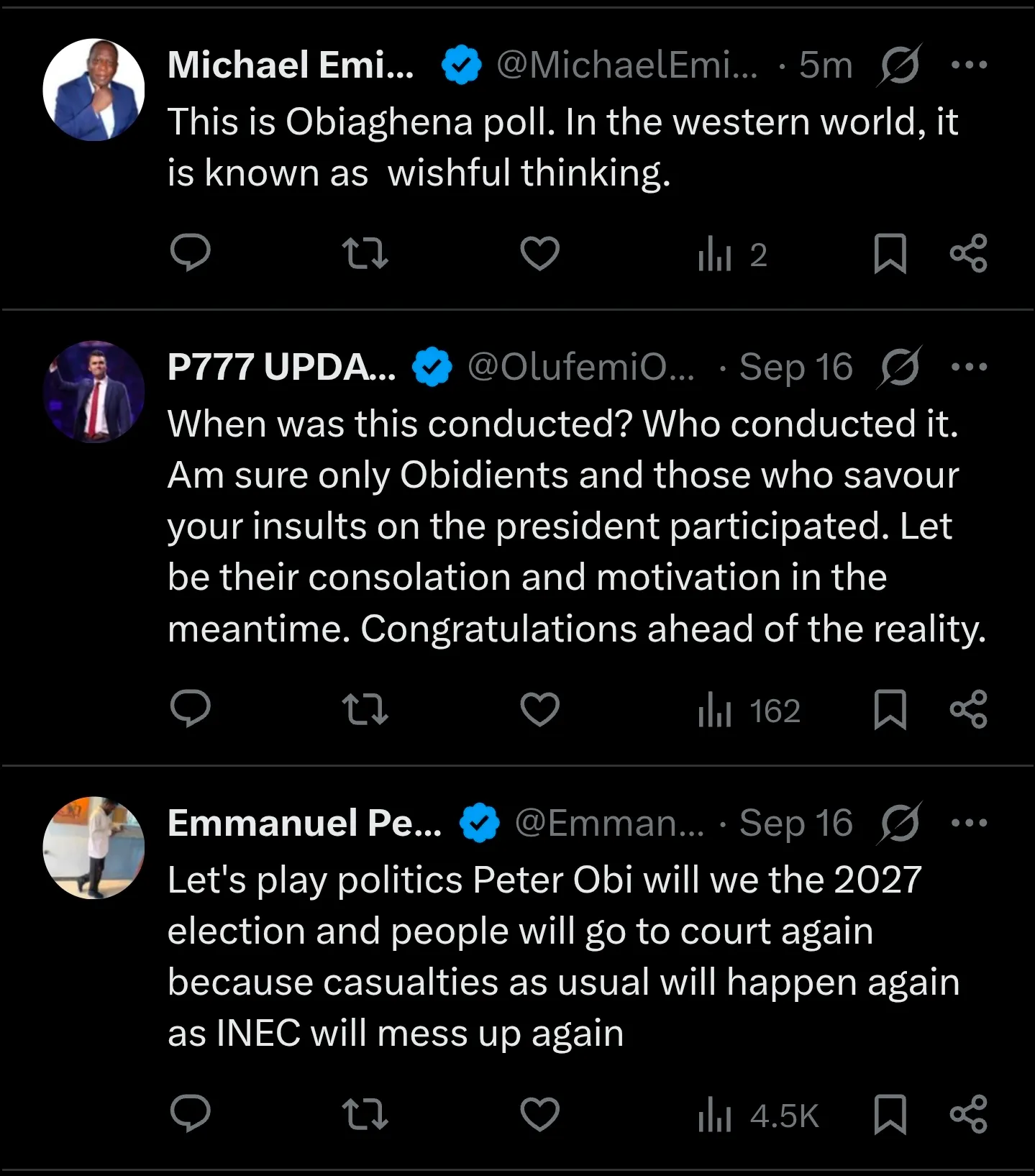

2027 election preparations gather momentum
The controversy comes as political activities surrounding Nigeria’s next general elections continue to develop.
The Independent National Electoral Commission (INEC) has published the final list of presidential candidates for the 2027 election, with Tinubu, Obi, Atiku and Makinde among the candidates listed on their respective party platforms.
While online polls can provide a snapshot of the views of participating respondents, their results do not determine the outcome of the presidential election.
Oseni’s post has consequently become the subject of debate, with social media users offering differing interpretations of what the figures mean ahead of the 2027 contest.