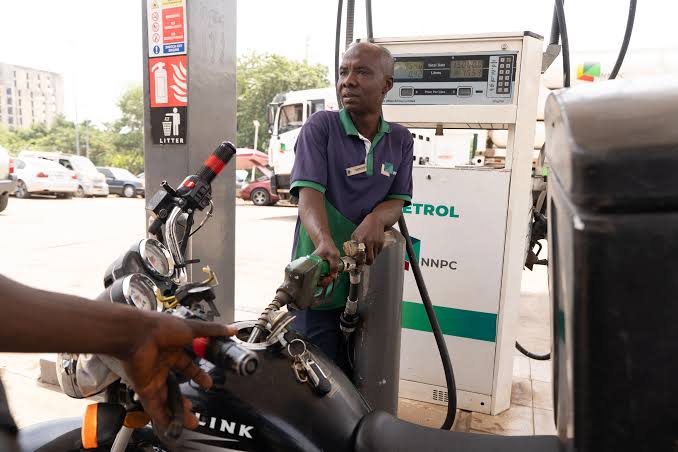
Nigeria’s fuel market is under fresh pressure as several private depots have increased petrol prices by up to ₦55 per litre, raising fears of another hike in pump prices across the country.
A market survey on Monday, July 20, 2026, showed that major depots reviewed their ex-depot rates upward by about three per cent, following a sharp rise in global crude oil prices.
According to PetroleumPriceNG, AIPEC raised its price from ₦1,200 to ₦1,248 per litre, SOBAZ increased from ₦1,205 to ₦1,255, Masters moved from ₦1,240 to ₦1,260, while Matrix Warri adjusted its rate from ₦1,230 to ₦1,250 per litre.
The latest increases are expected to reflect at filling stations in the coming days, adding to the financial strain on motorists and households already battling rising living costs.
Analysts linked the adjustment to the rally in international crude oil prices. Data from Oilprice.com showed that Brent crude briefly touched $90 per barrel before easing to $87.62, while West Texas Intermediate traded at $81.82 and Murban crude sold for $80.55 per barrel.
The higher crude prices have pushed up the landing cost of imported petrol, prompting marketers to adjust their rates.
Meanwhile, the Independent Petroleum Marketers Association of Nigeria (IPMAN) has called on the federal government and the Nigerian Midstream and Downstream Petroleum Regulatory Authority (NMDPRA) to review recently approved fuel import licences.
IPMAN’s National Publicity Secretary, Chinedu Ukadike, warned that imported petrol is now selling for around ₦1,350 per litre, far above the price offered by Dangote Refinery.
He added that the landing cost of imported fuel is about 20 per cent higher than Dangote’s supply price, arguing that the policy puts unnecessary pressure on Nigeria’s foreign exchange reserves and weakens the naira.
“If we are having continuous and uninterrupted supply, our problem is pricing. Is it not better we sit down and see how this issue can be controlled, than signing unnecessary import licences that will further inflate the price of petroleum products in our country?” Ukadike said.