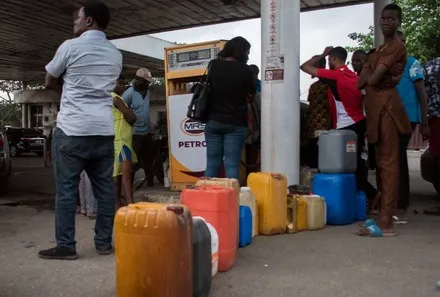
Petrol prices in Nigeria have climbed significantly in recent days, as depot owners and fuel marketers roll out new price adjustments amid ongoing disruptions in the global oil market.
The latest increase is largely driven by rising geopolitical tensions in the Middle East, especially around the Strait of Hormuz.
The situation has pushed up international crude prices, making fuel importation into Nigeria more expensive.
Market checks indicate that depot prices have surged by roughly 7 to 9 percent, with current rates nearing N1,300 per litre.
In some instances, prices have jumped by over N100 per litre within a short timeframe, reflecting the speed of the changes.
Several major depot operators have already adjusted their pricing.
Sahara Energy is now selling at N1,295 per litre, while AA Rano offers petrol at N1,285. Bulk Strategic Reserves is pegged at N1,193, and Parker Depot stands at N1,200 per litre.
Industry data suggests that these adjustments followed a fresh price review by Dangote Refinery, which remains a key supplier in the country.
On Saturday, March 21, 2026, the refinery announced another increase of N70 at the gantry, raising its price from N1,245 to N1,275 per litre.
This development has had a direct impact on retail outlets, with pump prices now ranging between N1,400 and N1,450 per litre in several locations nationwide.
Marketers linked to Dangote have also revised their rates. MRS Oil Nigeria, for instance, announced a new pump price of N1,332 per litre, while setting delivery and self-collection rates at N1,290 and N1,282 respectively.
The company has instructed its outlets to implement the new pricing immediately, adding that fresh orders can now be processed, with a minimum delivery volume of 50,000 litres, all sourced from the Dangote facility.
Experts warn that the continued rise in fuel prices could have wider economic implications.
As petrol costs increase, there is likely to be a ripple effect across transportation and goods, further driving inflation and placing additional pressure on household spending.